Our keynote speakers bring visionary perspectives, groundbreaking research, and real-world expertise to this year’s conference. These distinguished leaders in their fields will share insights that inspire discovery, spark collaboration, and shape the future of science.
Keynote Speakers
Opening Keynote Address
Prof. Dr. Bal Chandra Luitel, PhD
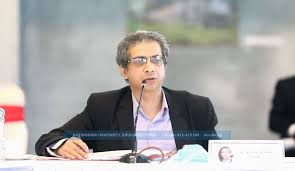
Bal Chandra Luitel, PhD, is a Professor of STEAM Education at Kathmandu University School of Education (KUSOED), where he currently serves as Dean and has held the UNESCO Chair in Teacher Education since 2022. Educated in Nepal and Australia, he earned his PhD from Curtin University with Chancellor’s Commendation and has worked internationally across Nepal, Australia, Portugal, and the USA. Prof. Luitel’s research addresses culturally decontextualized education in Nepal by integrating Eastern and Western philosophies, including Advaita, Madhyamika, and critical-emancipatory traditions. He has led over 20 funded projects, notably the Rupantaran (2016–2022) initiative, which promoted transformative, decolonial approaches to educational reform and holistic, place-based learning. He has mentored more than 30 doctoral students and contributes to global scholarship through the International Transformative Educational Research Network (INTERN). Under his leadership, KUSOED has strengthened programs in STEAM, multilingual education, counselling, and TVET while advancing community engagement through multiple centers. With over 120 publications, Prof. Luitel advocates for transformative education grounded in local-global synergy, critical consciousness, and context-based inquiry, positioning KUSOED as a hub for international transformative research.
Title: Leading from Within and Without: Transformative Thinking and Actions for Institution Development
Institutional development in higher education requires leadership that is simultaneously introspective and outward-looking. This opening keynote explores our praxis at Kathmandu University School of Education (KUSOED), where transformative leadership has been enacted through a two fold orientation: leading from within anchored in philosophical reflection, epistemic clarity, and values of impermanence and detachment and leading from without manifested in programmatic innovation, collaborative reform, and structural change. Leading from within emphasizes cultivating inner resources of wisdom, compassion, and reflective inquiry. At KUSOED, this has taken shape through the integration of classical epistemic terms into ‘modern’ research paradigms, the adaptation of Eastern and Western wisdoms into modern educational forms, and the design of courses that balance first-second-third persons reflections with philosophical inquiry. Such practices foreground the inner life of educators and students, nurturing resilience and ethical clarity as foundations for institutional growth. Leading from without highlights the outward enactment of transformative vision. This includes the launch of new teacher education programs, the embedding of holistic learning frameworks into curricula, and the championing of local knowledge such as folk traditions, proverbs, and indigenous practices as legitimate sources of pedagogical innovation. These outward actions have positioned KUSOED as a site of educational reform that is culturally rooted, socially responsive, and institutionally resilient.
My keynote argues that sustainable institutional development emerges from the interplay of these two dimensions. Inner transformation without outward action risks remaining abstract, while outward reform without inner grounding risks superficiality. By weaving together wisdom traditions, comparative philosophy, and contemporary educational demands, our leadership team at KUSOED demonstrates how transformative thinking and actions can foster generational healing, institutional resilience, and culturally resonant pedagogy. This twofold mode of leadership: within and without, offers a model for reimagining higher education institutions as spaces of both personal and collective transformation. It highlights the necessity of leaders who embody philosophical depth while enacting structural innovation, thereby ensuring that institutional development is not only strategic but also soulful, rooted in values that transcend time and context.
Keywords
Transformative leadership; institutional development; holistic learning; wisdom traditions; comparative philosophy; teacher education reform; Kathmandu University School of Education (KUSOED); local knowledge integration; reflective practice
Keynote Speaker
Assoc. Prof. Dr. Lily Taylor, PhD
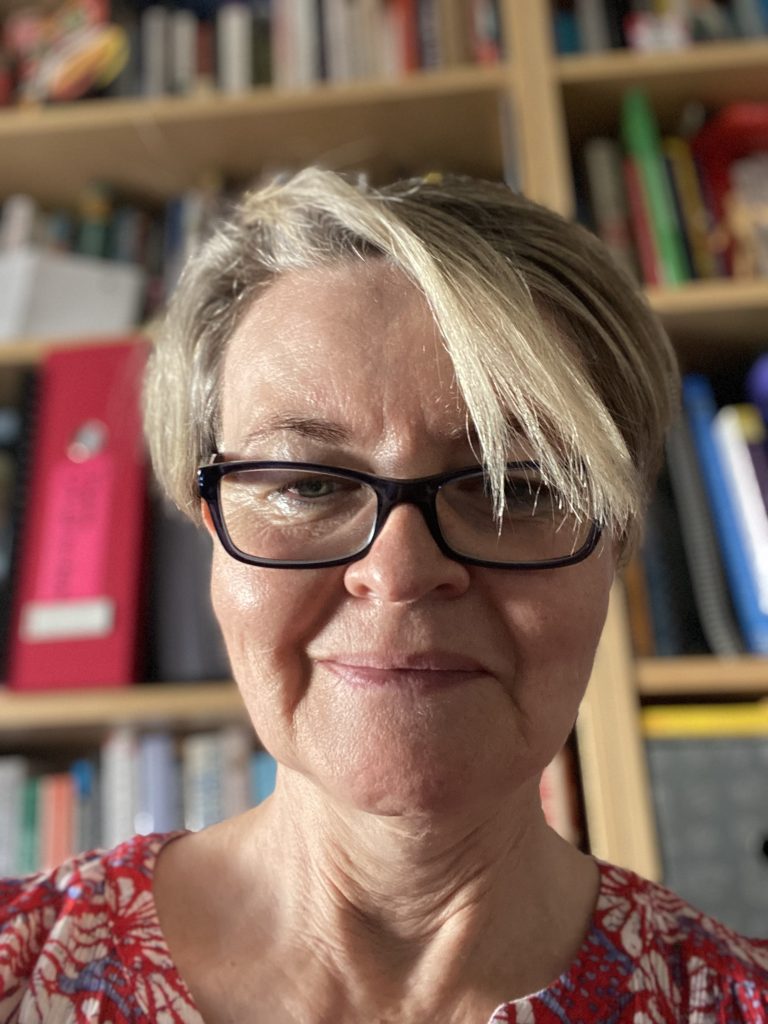
Elisabeth (Lily) Taylor, PhD, is an Associate Professor at the School of Education at the University of Notre Dame Australia. She completed her doctorate at the Science and Mathematics Education Centre (SMEC) at Curtin University and also holds a Master of Science degree (Mag. Rer. Nat.) from the University of Salzburg in Austria and a Master of Counselling (MCouns) degree from the University of Notre Dame Australia. During her career she has worked as a research scientist, educational researcher, secondary teacher, tertiary teacher educator and counsellor. Her research interests include STEAM Education, Education for Sustainability, Ethics in Science and pedagogies for addressing socio-scientific issues (SSIs) and integrating values into science education.
Title: Science/STEAM Teacher Education and the Rise of the Technical Interest: The Paradox of Being a Transformative Teacher Educator in Australia in 2026
Born in the 1960s, I grew up in the heart of Europe – in Austria – where I was lucky enough to enjoy the benefits of an education characterised by principles of the educational philosophy of Bildung. This meant that my education was broad with a focus on the formation of the whole being. Thus, I enjoyed a rich curriculum of multiple languages, arts, dance, philosophy, ethics, psychology, history, geography in addition to the educational foci such as science, mathematics, physics, chemistry and biology. My education combined the Humanities and the Natural Sciences in a seamless manner, involving both inquiry-based learning and teacher-centred approaches. In short, for me there has never been a contradiction between combining inquiry-based approaches and explicit teaching. Ever since completing my doctorate in science education focusing on transformative learning in the context of teaching values in science education in 2004, I have been a teacher educator at universities in Australia. Science teacher education – and by implication STEM/STEAM Education – has been strongly influenced by Inquiry-Based Learning (IBL) approaches. Teacher education students have been taught how to facilitate authentic, hands-on, collaborative, student-centred learning experiences for their students with the 5-E Model being one of the most favoured pedagogical models. The 5-E Model ensured that students would engage with and explore aspects of new concepts before being ‘taught’ the relevant content. This approach whilst not having been universally and successfully implemented in every classroom around the country, has provided opportunities to include aspects of transformative learning (e.g., curriculum integration, reflection on values, discussions about ethical dilemmas) particularly relevant for Science and STEAM Education. Around the world, many countries are trying to move away from teacher-centred approaches to more inquiry-based approaches, e.g., Indonesia’s recent embrace of Deep Learning.
Fast forward to 2026.
Australian Education is in flux. Teacher education institutions have been required to rewrite their courses to reflect a change in government mandate: Inquiry-Based Learning has fallen out of favour and Explicit Direct Instruction is about to become the new norm. Teacher and content-centred, focusing on mastery learning, Explicit Direct Instruction is driven by Cognitive Load Theory holding that students need to be taught content and concepts explicitly prior to engaging in practical activities which, according to the theory, reduces students’ cognitive load and thus enables learning. How did we get here? Years of government investment into education resulting in limited gains reflected in international test performance may have been amongst the main driver for this change. Some in the teacher education community wholeheartedly embrace this new development. Others struggle with the move from IBL to Explicit Direct Instruction that – on the surface – seems incommensurable to them. In other words, some Australian teacher educators now find themselves in a paradoxical situation where the very approach they have been trying to get away from by embracing IBL is now very quickly becoming the preferred approach to education in Australia, while many countries around the world are moving in the opposite direction. As a transformative educator, I have always been in favour of improving education and enabling learning. As such, I wonder how we can avoid the danger of letting an ideology-driven, technical interest dominate over practical and emancipatory interests where students, amongst other things, learn to think critically and reflectively. Based on my own upbringing in a Bildung context, I can see how the two apparent opposite approaches can sit side-by-side and support each other for the benefit of learners. The situation is also a stark reminder not to take for granted transformative innovation and progress made thus far.
Keywords
Holistic education, Inquiry, Explicit instruction, Transformative learning, Pedagogical approaches
Closing Keynote Address
Prof. Dr. Peter C. Taylor, PhD
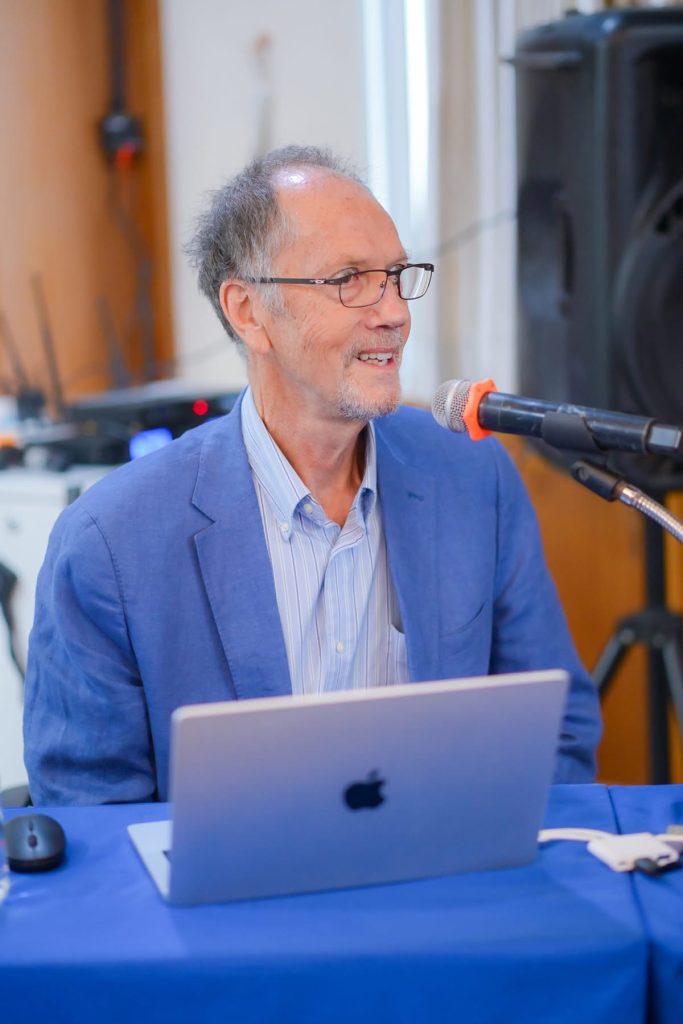
Prof. Dr. Peter Charles Taylor is director of the International Transformative Education Research Network (ITERN) and Honorary Professor in the Schools of Education at Murdoch University and Curtin University. During 3 decades at Curtin’s Science and Mathematics Education Centre (SMEC), Peter developed a multi-paradigmatic Arts-based model of research as transformative learning designed to engage professional educators in exploring their cultural histories, reconceptualizing their professional practices, and developing their agencies as inspiring leaders of education for sustainable development. Firsthand stories of these transformative learning experiences are recounted in a book co-edited with Professor Bal Chandra Luitel: Research as Transformative Learning for Sustainable Futures: Glocal Voices and Visions (Brill, 2019). Peter shares with Dr Elisabeth (Lily) Taylor a vision of education for cultural and environmental sustainability aimed at developing young people’s ethical and spiritual values, which is the focus of their co-edited book: Transformative STEAM Education for Sustainable Development: International Perspectives and Practices (Brill, 2022). During his four-decade career, Peter has supervised to completion 51 doctoral theses and 18 MPhil theses, and has been a chief investigator on national and international research grants. He has a globally impactful research publishing record of over 10,900 Google Scholar citations (h-index of 45, i10 index of 103). Today, Peter continues to actively support the visionary leadership of his graduates as they strive to transform teacher education programs in universities across Asia, Africa, the Middle East and the Pacific.
Title: Educational Research as/for Transformative Learning: An Integral Wisdom Worldview
In preparation for this keynote address I reviewed foundational concepts of my key publications that have contributed to the development of research as transformative learning. In doing so, I came to realise that the history of powerful scholarly concepts underpinning our unfolding field of transformative educational inquiry and praxis is in danger of being lost. To my dismay, a rule of thumb in many contemporary postgraduate research programs is the institutional requirement for thesis/dissertation literature reviews to focus only on the past 5 or so years. This renders the historic evolution of foundational concepts largely invisible, thereby weakening scholarly resistance to the historic hegemony of the technical interest (Habermas, 1972). So, my aim here is to provide a succinct account of the historic evolution of key foundational concepts that are essential to securing the ongoing viability of the integral research paradigm of transformative education (Taylor, 2008; Taylor, Taylor & Luitel, 2011; Taylor, 2013).
In particular what comes to mind is a chapter that I wrote for the Handbook of Research on Science Education (Taylor, 2014). In researching the historical roots of Western philosophical ideas, I found it fascinating to discover the powerfully contrasting philosophical worldviews of Rene Descartes and Immanual Kante. Descartes’ Discourse on Method (1637) was highly influential in providing a powerful positivistic framing – objectivist epistemology, realist ontology, value neutral axiology – of the Natural Sciences. Later, in its desire to be awarded academic status for entry into the academy Social Science researchers adopted this quantitative paradigm which, during the 20th century, became hegemonic in defining how educational research methodologies should be designed, implemented and legitimated. In stark contrast, Kant’s Critique of Pure Reason (1781) proposed a contrasting paradigm of human rationality that recognises the mind as having a central role in shaping perception and mediating our language-dependent interpretive understandings of the natural world. This revolutionary social philosophy asserts a dialectical relationship between our experience of ‘the world out there’ and our ‘inner worlds’, whereby the scientific truth is a dynamic social construct whose legitimacy (validity, reliability) is contingent on our many and varied human interests, whether they be Habermas’ (1972) technical, communicative or emancipatory interests. Likewise, the ‘father’ of radical constructivist theory, Ernst von Glasersfeld (my 1993 PhD thesis examiner), adopted a Kantian perspective and argued that the legitimacy of our knowledge (scientific and otherwise) depends on its viability for meeting our collective interests. And in Australia, the viability of 60,000 year-old indigenous wisdom traditions is deeply contingent on the needs of indigenous peoples’ interest in living collectively and in harmony with the natural ecosystems of Country, guided by their spiritual connection with the Cosmos which manifests all around them.
So, how can transformative education researchers reconcile these historically conflicting paradigms? The social philosopher Thomas Kuhn (1962) argues in his book, the Structure of Scientific Revolutions, that paradigms, being incommensurable by nature, are like prison cells; no two can converse meaningfully. And that it takes a revolution of thought to break out and establish a new paradigm. As examples, he cites the incommensurability of Archimedes’ and Einstein’s paradigms; now we can add the Quantum Theory paradigm to this sense of incommensurability. However, in our field of transformative education research, which honours the synergy of multiple paradigms – positivism, interpretivism, criticalism, postmodernism – ‘either-or’ binary logic is counterproductive and disempowering as we witnessed with the paradigm wars of the 1980s (Denzin & Lincoln, 1994). This is where the philosopher Ken Wilber’s (2001) metatheory of integral wisdom comes to our aid. Wilber’s metatheory synthesises the fields of wisdom, science, philosophy and spirituality into a coherent (rather than conflicting) framework, thereby providing transformative education researchers with compelling justification for designing our research studies by drawing on the (disparate) ontologies, epistemologies and axiologies of multiple paradigms (Settlemaier & Taylor, 2001). Wilber’s metatheory can be visualised metaphorically in various ways, including a four-quadrant model and a holarchy. Wilber’s integral metatheory enables the protégés of our philosopher forefathers – Renee Descartes and Immanuel Kant – to reconcile their long-standing paradigm wars and design transformative research approaches for the 21st century born of an integral wisdom worldview.
Keywords
Transformative Education, Integral Research Paradigm, Paradigms of Educational Research Transformative, Learning, Integral Wisdom
References
Australian Indigenous HealthInfoNet. Country, culture and spirituality. https://healthinfonet.ecu.edu.au/learn/health-topics/social-and-emotional-wellbeing/country-culture-spirituality/
Denzin, N. K., & Lincoln, Y. S. (Eds.) (1994). Handbook of qualitative research. Sage.
Descartes, R. (1637/1998). Discourse on method. Hackett Publishing.
Glasersfeld, E. v. (1995). Radical constructivism: A way of knowing and learning: Studies in mathematics. Falmer Press.
Habermas, J. (1968/1972). Knowledge and human interests. Beacon Press.
Kant, I. (1781/2018). Critique of pure reason. DigiReads.com.
Kuhn, T. S. (1962). The structure of scientific revolutions. University of Chicago Press.
Settlemaier, E., & Taylor, P. (2001). Ken Wilber’s integral philosophy and educational research: Fleshing out the ‘seventh moment’ (and beyond?). Paper presented at the AARE International Education and Research Conference.
Taylor, P. C. (2014). Contemporary qualitative research: Toward an integral research perspective (pp. 38-54). In N. Lederman & S. K. Abell (Eds.) (2014), Handbook of research on science education. Routledge.
Taylor, P. C. S. (2013). Research as transformative learning for meaning-centered professional development (pp. 168-185). In O. Kovbasyuk & P. Blessinger (Eds.), Meaning centred education: International perspectives and explorations in higher education. Routledge.
Taylor, P. C., Taylor, E., & Luitel, B. C. (2011). Multi-paradigmatic transformative research as/for teacher education: An integral perspective (pp. 371-387). In B. J Fraser, K. Tobin & C. McRobbie, (Eds.). Second international handbook of science education. Springer.
Taylor, P. C. (2008). Multi-paradigmatic research design spaces for cultural studies researchers embodying postcolonical theorizing. Cultural Studies of Science Education, 3(4), 881-890.
Taylor, P. C. S. (1993). An interpretive study of the role of teacher beliefs in the implementation of constructivist theory in a secondary school mathematics classroom. Curtin University Repository.
Wilber, K. (2001). A theory of everything: An integral vision for business, politics, science and spirituality. Shambhala.
Featured Speakers
Prof. Dr. Yuli Rahmawati
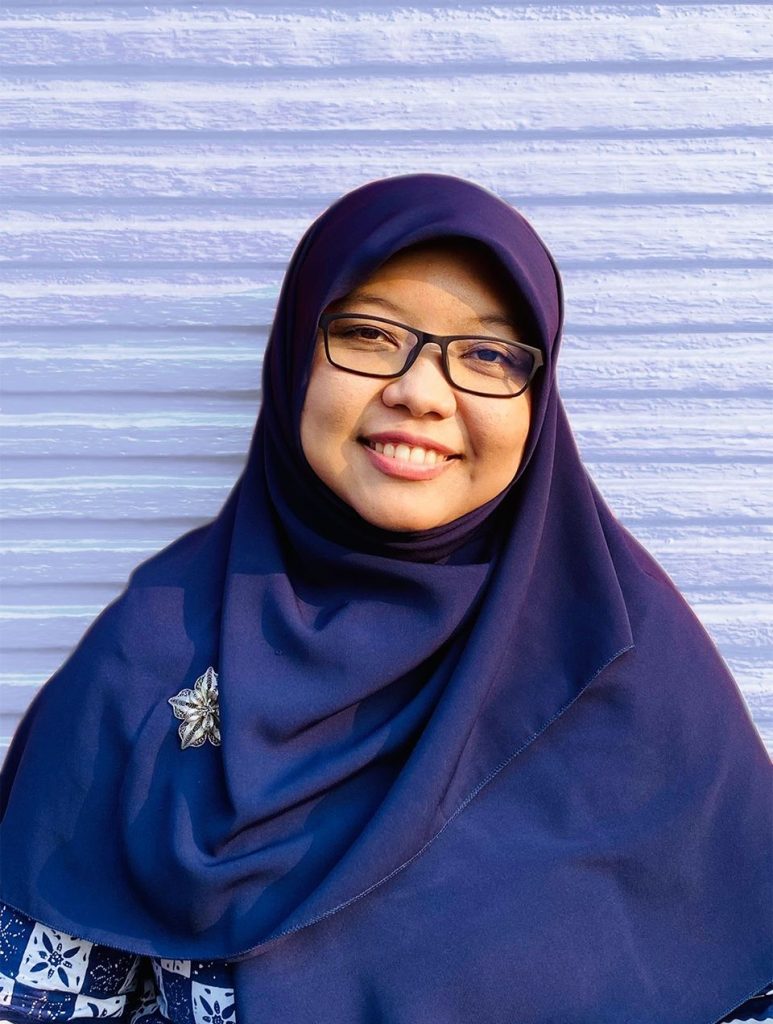
Prof. Yuli Rahmawati is the Attaché of Education and Culture at the Embassy of the Republic of Indonesia in Canberra, Australia (2025–2028), and Professor of Chemistry Education at Universitas Negeri Jakarta. She earned her PhD in Science Education from Curtin University, Australia, after completing postgraduate studies with distinction. Her career spans academia, educational leadership, and educational diplomacy, with previous roles including Head of the Chemistry Education Department and Assistant to the Vice Rector for Planning and Collaboration at Universitas Negeri Jakarta. Her research focuses on transformative education, culturally responsive transformative teaching, STEAM education, ethnochemistry, sustainability education, teacher professional learning, and educational leadership. She has worked on numerous nationally and internationally funded research projects supported by UNESCO, DAAD, the Australia Research Council, the Australia Indonesia Institute, UMAP, and the Indonesian Ministry of Education. Prof. Rahmawati has published more than 300 scholarly works and serves as a reviewer for leading international journals. Her current work advances educational diplomacy by strengthening Indonesia partnerships with Australia and Vanuatu, promoting international research collaboration, and fostering transformative, culturally responsive, and socially just education through leadership, critical reflection, and intercultural engagement.
Title: Living Transformative Learning: Reconstructing Identity and Leadership from Academia to Educational Diplomacy
This paper explores my evolving identity as an academic leader and subsequently as the Attaché of Education and Culture in Australia through the interconnected lenses of Transformative Learning and Living Educational Theory (LET). Grounded in Living Educational Theory, the study examines how critical self-reflection on lived experience generates explanations of educational practice while fostering continuous personal and professional transformation. Transformative learning provides the conceptual lens for understanding how professional transitions, intercultural engagement, and critical reflection reshape identity, values, and leadership across diverse educational and diplomatic contexts. Using reflective self-study, the paper traces my transition from a chemistry teacher educator in Indonesia to an educational diplomat responsible for strengthening international educational collaboration between Indonesia with Australia and Vanuatu. This journey represents an ongoing process of perspective transformation, in which deeply held assumptions about leadership, culture, identity, and professional purpose are continually questioned and reconstructed through authentic practice. Three transformative values emerge as central to my leadership development. First, transformative leadership grounded in equity, empowerment, and social justice informs efforts to create inclusive educational opportunities and foster agency among students, educators, and institutions. Second, dialectical thinking enables productive engagement with tensions arising from multiple identities, as an academic, diplomat, woman leader, Indonesian, Muslim, and global citizen, transforming contradictions into opportunities for growth, creativity, and innovation. Third, an ethics of care emphasizes compassion, relational accountability, dialogue, and trust as essential foundations for sustainable educational partnerships and intercultural collaboration. The paper argues that transformative learning is a lifelong, values-based process through which leaders critically reinterpret their experiences while integrating cultural hybridity, ethical responsibility, and professional practice. Living Educational Theory strengthens this process by positioning values as living standards of judgment that guide authentic action and continuous improvement. The study contributes to scholarship on transformative learning, educational leadership, and educational diplomacy by proposing transformative educational diplomacy as a values-driven approach that integrates critical reflection, intercultural understanding, empowerment, and collaborative leadership to promote socially just and sustainable international educational partnerships.
Keywords
Transformative learning; living educational theory; educational diplomacy; professional identity; transformative leadership; reflective practice
Assoc. Prof. Dr. Suresh Gautam
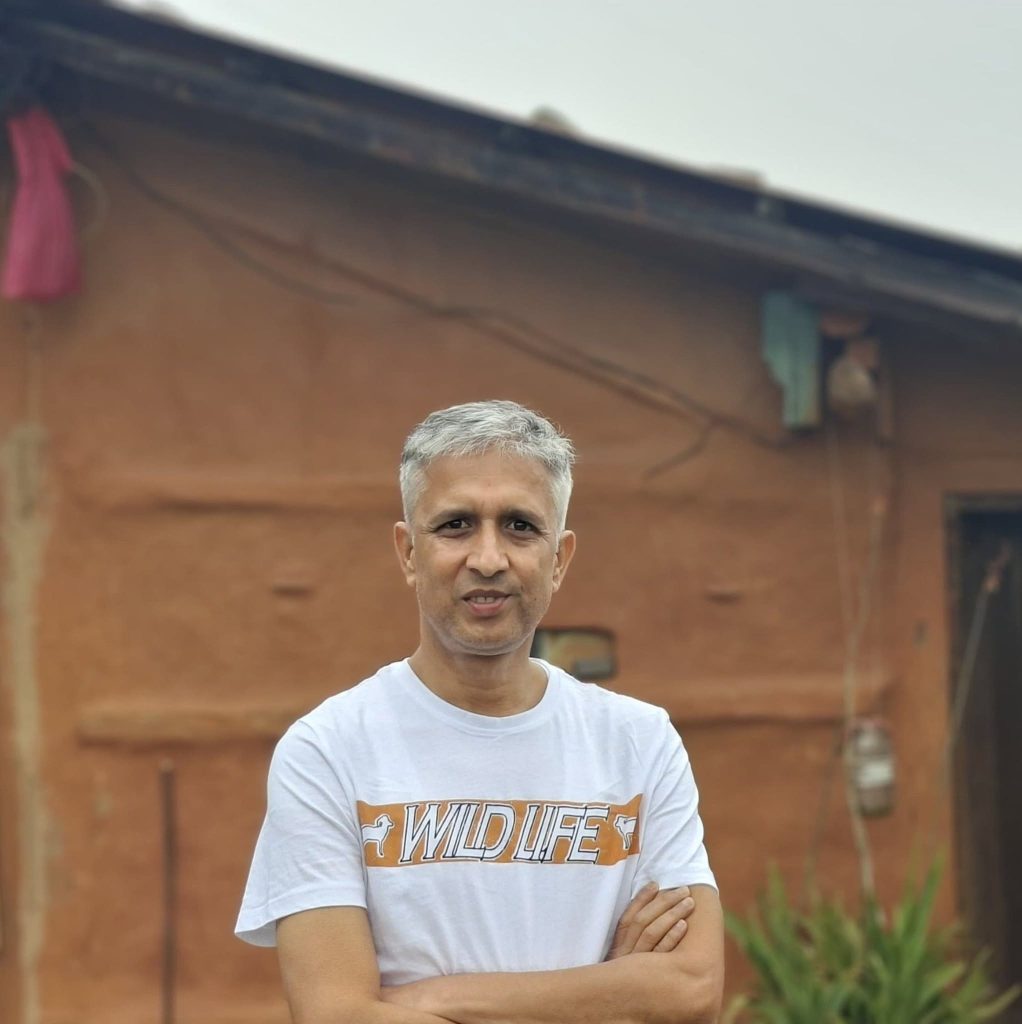
I currently work for the Department of Development Education at Kathmandu University School of Education in Nepal. My primary research interests are changing; usually, I did/do research in education, sustainable development, qualitative research, and youth and adult education in urban and rural settings, and will continue with a focus on sustainability and social transformation. I teach research, the sociology of education, and development to graduate and postgraduate students, and have been researching cross-cutting issues in education and development to strengthen the national education sector. Recently, my interests have shifted to living philosophies of self, selfs and shelves.
Title: Memory, Memorization, and Consciousness for Sustainability from Trika Philosophy
Contemporary sustainability discourse increasingly locates the roots of ecological and social crisis not merely in material practice but in a deeper crisis of consciousness. The Trika stream of the Sarvāmnāya tradition — the pūrvāmnāya, revealed through Śiva’s eastern face and centered on the triadic goddesses Parā, Parāparā, and Aparā — offers a rigorous non-dual philosophical framework through which sustainability may be reconceived via the interrelated categories of memory (smṛti), memorization (adhyayana), and consciousness (cit). Within this tradition, as articulated in the foundational works of Abhinavagupta (fl. c. 975–1025 CE) and subsequently synthesized within the broader Sarvāmnāya Kaula framework, memory is not reducible to psychological recollection; it denotes the awakened remembrance (pratyabhijñā) of one’s essential non-difference from the all-pervasive, self-luminous consciousness of Paramaśiva. The obscuration of this primordial remembrance is held to give rise to the experience of ontological separation, the objectification of nature, and consequently unsustainable modes of habitation and use. From this perspective, memorization (adhyayana) is not an end in itself but a disciplined contemplative practice through which revealed scripture (śāstra), mantra, and the oral instruction of the guru (guru-upadeśa) are progressively internalized, culminating in the direct recognition of one’s innate freedom (svātantrya) — a principle Sarvāmnāya sources identify as the foundational premise of Kaula practice itself. Kaula’s fundamental principle is understood as freedom, and the disciplined cultivation of clarity of mind and heart (sattva) is presented as the necessary condition for exercising that freedom. This recognition effects a reorientation of perception, displacing an instrumental stance of domination over nature with one of active participation in the universal pulsation (spanda) of consciousness. Sustainability, on this reading, is not an externally imposed regulatory achievement but the spontaneous ethical expression of awakened awareness, in which the cosmos is recognized as the dynamic self-manifestation of the same consciousness that constitutes the perceiving subject. Methodologically, this paper draws on the metaphysical architecture developed in Abhinavagupta’s Tantrāloka and Parātrīśikā-vivaraṇa, employing a philosophical-hermeneutic methodology, and examines how remembrance (smṛti) functions simultaneously as an ontological and an ethical principle. It argues that durable sustainability cannot be secured through policy instruments or technological intervention alone, but requires the restoration of conscious participation in the underlying unity of existence. By recovering the Trika understanding of memory as an act of self-recognition, situated within its living Sarvāmnāya transmission, this study proposes an indigenous philosophical paradigm in which ecological responsibility, ethical conduct, and spiritual realization converge — thereby contributing a distinctive Śaiva-Śākta non-dual perspective to contemporary sustainability scholarship.
Keywords
Trika Philosophy, Consciousness, Memory (Smṛti), Sustainability, Non-dualism
Assoc. Prof. Dr. Binod Prasad Pant
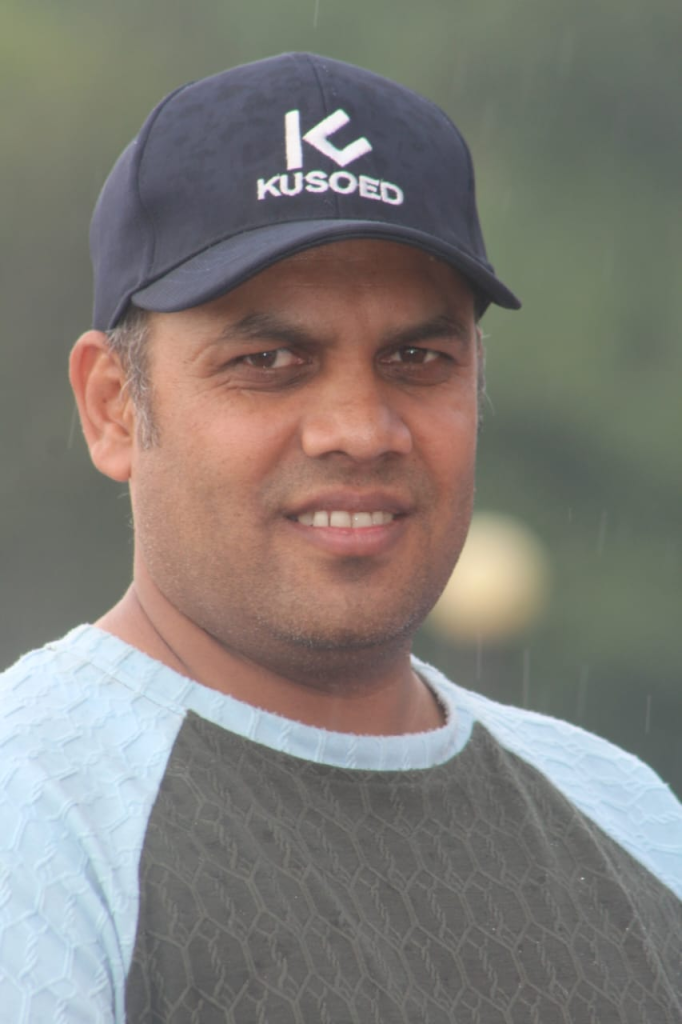
Dr. Binod Prasad Pant is an Associate Professor and Associate Dean at Kathmandu University, School of Education (KUSOED), Nepal. He contributed as the Head of Department (HoD) of the Department of STEAM Education at KUSOED for about seven years. He has been teaching various courses at the Master’s and MPhil levels and has been supervising dissertations and research projects. He is also a subject committee member of Science, Technology, Engineering, Arts, and Mathematics (STEAM) Education at KUSOED. He has presented several papers at national and international conferences. He has been involved in developing resource materials at the school level and teachers’ manuals. He has been working with a number of Nepali teachers and teacher educators who examine their lived experiences as students, teachers, and teacher educators. He speaks and writes about pedagogical innovations, uses of technology in mathematics education, child-friendly classrooms, authentic assessment, etc. His research interests are mathematics education, qualitative research, STEAM Education, Transformative Educational Research, and research studies on Reflective Practices.
Title: STEAMing the Educational System for Transforming Learning
Abstract
….
Keywords
Dr. Roshani Rajbanshi
Title: Rupantaran: Learning Beyond Boundaries
In this presentation, I describe my transformation seen from transformative learning theory developed by Jack Mezirow and also from Habermas three knowledge constitutive interests. I discuss transformative learning from various angles. Formal, informal, and nonformal learning can lead to transformative learning. Besides that, transformation happens from learning, unlearning and relearning. Most formal learning leads to knowledge construction, which is mostly instrumental learning that is also regarded as technical learning from Habermas perspective which entails learning in a controlled setting where new skills and knowledge are created without challenging existing knowledge. The second stage is unlearning, when one becomes critical of the worldview, questions the status quo and challenges one’s own knowledge and thinking. Knowledge construction during unlearning involves negotiating our own path of learning, “acting upon our purposes, values, feelings and meanings rather than those we have uncritically assimilated for others.” (Taylor, p. 5). Unlearning happens by interacting with others and interpreting the dialogues we have with the inside and outside world, which can be referred to communicative learning from Habermas term. During unlearning, one’s previously established frame of reference is altered, which is a result of non-formal learning and critically reflecting on our previous values, beliefs and assumptions. The third stage is relearning when one is aware of the new ideas, information, and skills that one has acquired through critical reflection and internalization. During relearning, new meanings are made, the learner is empowered which Habermas calls emancipatory learning. Thus, the transformation of the learner’s soul in addition to their body and mind occurs along with ontological shift in perspective. Transformation is a process as well as a product. Thus, transformative learning is a process as it involves learning from technical to communicative to emancipatory phases and product is the outcome of transformative learning, which is a transformed body, mind and soul, which I see myself as a transformed self from a naïve PhD graduate to Acting Department Head.
Keywords
transformative learning, transformative learning theory, Habermas, critical reflection, emancipatory learning
Assoc. Prof. Dr. Indra Mani Rai
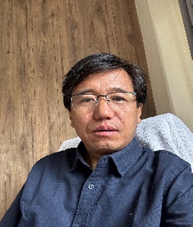
Indra Mani Rai (Yamphu) earned a PhD in Development Studies from Kathmandu University School of Education in 2018. He served as a full-time lecturer at Kathmandu University School of Education in 2016 and has been an assistant professor at Tribhuvan University’s Central Department of Education since 2017, teaching postgraduate and MPhil courses, including Education and Development, Research Methodology, Philosophy and Theory of Education, and Diversity in Education. He has also worked for about a decade as a visiting faculty member at Kathmandu University, teaching courses such as Decolonial Education, Indigenous Values and Development Approaches, Sustainable Development, and Theory and Practice in Education. His research interests focus on transformative education, sustainable development, and Indigenous knowledge, alongside curriculum development, teacher training, mentoring MPhil and PhD students, and active participation in national and international academic forums on Indigenous issues. Since 2024, he has been working as an associate professor at Kathmandu University School of Education, Nepal. He has more than three dozen publications, including inter/national peer reviewed papers, book chapters, editorials, textbooks, and conference proceedings.
Title: Politics of Integrating Indigenous Knowledge in Education: Decoloniality in Praxis for Epistemic Justice
Globally, modern education has a legacy of second-generation/colonialism or scientific/colonialism that has actively excluded the Indigenous knowledge systems. However, there is growing recognition of Indigenous knowledge for combating the climate crisis, promoting sustainability, and fostering holistic learning. Decolonial thinkers in education have long been advocating for the integration of Indigenous knowledge in the modern education system with little consideration of the risk of distorting its original meaning and context. In this sense, this paper examines the paradox of integrating Indigenous Knowledge Systems (IKS) into modern education frameworks. I argue that Indigenous knowledge is a holistic and lived body of knowledge that represents lived experiences, beliefs, and spiritual practices transmitted down through generations, whereas institutionalized modern education systems that adhere to the ivory tower approach to education incorporate partial Indigenous knowledge, disconnecting it from the whole through either written documentation or oral examples. Thus, the integration of Indigenous Knowledge leads to its simplification, commodification, and marginalization when removed from its holistic cultural and spiritual context. Thus, institutionalization of Indigenous knowledge is not the solution to preserve it; rather, it demands transformative praxis. Based on the review of the past studies and case examples, this paper contends that adhering a dialogical and pluralistic educational approach respects multiple epistemologies rather than subjugation of Indigenous knowledge through dominant Western knowledge in the name of integration. The study concludes that coexistence and mutual enrichment, rather than assimilation, should be the aim of integration. To overcome the paradox and safeguard authentic and holistic Indigenous knowledge within contemporary educational systems, a transformative educational model of integration is essential that promotes epistemic justice.
Keywords
Indigenous knowledge, integration, transformative, modern education
Dr. Nalini Chitanand
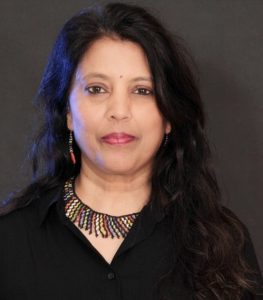
Title: Diffractive Re- worlding for the Global South: Cultivating a Southern Gaze grounded in Ubuntu principles
While the polycrisis – the entanglement of economic, political, environmental, technological and health disruptions that interact to amplify one another – has gained currency in recent times, especially in the global north, societies in the global south have always been a site of systemic crisis, complexities and disruptions (Le Grange, 2024; Kelecha, 2026). Universities are embedded in societies and are shaped by (and shape) the multiple, conflicting and converging forces and are not shielded from polycrisis. Le Grange (2024), drawing on Donna Harraway (2016) advocates for staying with the trouble in higher education, that is, engaging with the challenges and complexities inherent in our higher education institutions, rather than avoiding them. To do this, will require expanding our collective response-ability (Stein, 2024) – our ability to respond (Barad, 2007; Murris & Bozalek, 2019) – to what is being silenced in more accountable ways. In this talk, I offer provocations on how we may counter the silences and prevailing hegemonies by engaging in transformative and decolonial praxis. This directly engages with the TERSD 2026 vision and its commitment to emancipatory, praxis-driven research in times of crisis. I draw on my research on professional development in higher education in the global south, specifically, South Africa, where two dominant forces: Eurocentric coloniality and neoliberalism (Heleta 2023; Hlashwayo, 2022) have had a profound impact on the structuring of professional development and higher education practices: curricula, pedagogy, research and engagement more generally.
Inspired by posthumanist scholar Karen Barad (2007) and decolonial scholar Sabelo Ndlovu-Gatsheni (2021), I propose a diffractive re-worlding for higher education in the Global South. Rather than traditional reflection (or reflexivity) only, which primarily focuses on changing the individual mindsets of academics, a diffractive approach serves as a materialist, decolonial praxis that involves a radical rethinking and change of the material and relational conditions in which academics and students engage. It is about the undoing of the Eurocentric colonial and neoliberal ‘world’ of HE and the creation of a new ‘world ’, a new way of engaging, being and becoming in higher education. At the heart of this re-worlding is the cultivation of a southern gaze, grounded in Ubuntu principles. This gaze actively pursues emancipatory interests by confronting oppressive structures through epistemic disobedience and de-linking (Mignolo, 2007, 2018), actively questioning, resisting and decentering solely Western-centric ways of producing, validating and disseminating knowledge and recentering marginalised knowledges. It is important to acknowledge that cultivating a southern gaze does not mean rejecting western knowledges but rather embraces plurality of knowledges (Heleta, 2023), epistemic reciprocity (Naidoo et al, 2022) and pluriversality (Mignolo, 2007). Grounding the southern gaze in the African philosophical framework of Ubuntu – which emphasises care, compassion, hospitality and relationality – aligns the decolonial higher education foci with TERSD’s dharma ideals of moral duty and interdependence with human and more-than-human entities with whom we share the planet. This ethico-ontoepistemological (Barad, 2007) focus has the potential to shift higher education from a technocratic, neoliberal endeavour to a space where shared experiences and communal knowledge creation are valued, respected and legitimised. Practically, the approach harmonises institutional autonomy with communal belonging through enhancing community, fostering recognition, trust and respect, co-designing curricula with students and community peers and facilitating intergenerational and community engagement. Ultimately, this proposed diffractive re-worlding is sustained by cultivating loving, decolonial relationships (Maldonado Torres, 2007; Maluleka, 2024) to foster transformative, sustainable and socially just educational futures for the global south.
Keywords
polycrisis, decolonial praxis, southern gaze, Ubuntu, diffractive re-worlding
References
Barad, K. 2007. Meeting the Universe Halfway: Quantum Physics and the Entanglement of Matter and Meaning. Durham, NC: Duke University Press.
Haraway, D. J. 2016. Staying with the trouble. Duke University Press. Heleta, S. 2023. Long road to decolonization of neoliberal and Eurocentric South African higher education. In: Maringe, F. (ed.) Colonization and Epistemic Injustice in Higher Education. Routledge: 40-54.
Hlatshwayo, M.N. 2022. The rise of the neoliberal university in South Africa: Some implications for curriculum imagination(s). Education as Change, 26(1): 1-21.
Le Grange, L. 2024. The many sides to performativity. Journal of Education (University of KwaZulu-Natal), (96): 25-37.
Kelecha, M. 2026. Polycrisis and global inequality. Global Sustainability, 9, e5: 1–13.
Maldonado-Torres, N. 2007. On the coloniality of being: Contributions to the development of a concept. Cultural Studies, 21(2-3): 240-270.
Maluleka, P. 2024. Teaching through and with decolonial love in a neoliberal South African University. Transformation in Higher Education, 9.
Mignolo, W. D. 2007. Delinking: The rhetoric of modernity, the logic of coloniality and the grammar of de-coloniality. Cultural Studies, 21(2-3): 449-514.
Murris K. & Bozalek, V. 2019. Diffraction and response-able reading of texts: The relational ontologies of Barad and Deleuze. International Journal of Qualitative Studies in Education, 32(7): 872-886.
Naidoo, K., Trahar, S., Lucas, L., Muhuro, P., & Wisker, G. 2020. ‘You have to change, the curriculum stays the same’: decoloniality and curricular justice in South African higher education. Compare: A Journal of Comparative and International Education, 50(7): 961-977.
Ndlovu-Gatsheni, S.J. 2021. Internationalisation of higher education for pluriversity: A decolonial reflection. Journal of the British Academy, 9(1): 77-98.
Stein, S. 2024. The Paradox of Educational Silences and Cacophonies in Liquid Modernity. Policy and Practice, (39): 1-10.
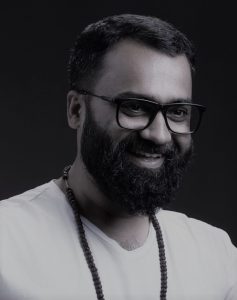
Shree Krishna Wagle (Shree) is a PhD graduate in Transformative Education and Research (specialized to the contemplative domain of ecological spirituality) from Kathmandu University, School of Education, Nepal. Also an MPhil graduate in educational leadership (specialized to the psychological domain of conditioning of learning emotions), Shree particularly makes research studies in the field related to educational philosophy, learning psychology, and ecological spirituality in education. At present, Shree facilitates Masters, MPhil and PhD researchers in the area of (post)qualitative research, and has been engaged with practitioner research, self-reflective inquiry, and contemplative/mindful inquiry in Education.
With our contemporary world experiencing ecological, relational and epistemic crises, it is important now more than ever before for us to have an educational approach which revives our lifefulness as opposed to managing our distress. Building on my experience as Head of the School Counselling and Wellbeing Unit at Kathmandu University, I introduce to you an original philosophy, Lifefulness (Jīvanpūrṇatā), that draws upon cultural traditions of mindfulness, heartfulness, and bodyfulness, articulated through Vāv (flows) of Mādhurya, Prem, Śṛṅgāra and Hāsya. Based on the Vedic traditional wisdom of Nepali and Sanskrit literature and meditation practice of Zen Buddhism, Lifefulness presents a decolonial practice-based alternative to the imported wellbeing framework by reclaiming school counselling as a dharma-based, relational and embodied practice. In my address, I am going to talk about how Lifefulness can redefine school counselling as an emancipatory space where students, families and educators create their lifefulness in times of crisis, based on the traditional wisdom of the Global South and not in response to it.
Keywords
Jivanta Vaav, lifefulness, school counseling, wellbeing
Dr. Neni Mariana
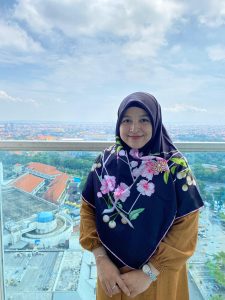
Dr Neni Mariana is Associate Professor of Elementary Mathematics Education at Universitas Negeri Surabaya (UNESA), Indonesia, where she teaches in the Elementary Teacher Education (PGSD) programme within the Faculty of Education. Her homebase is the doctoral program of Elementary Education and has been Coordinator of Elementary Education Masters degree study program since 2023. She earned her PhD from Murdoch University, Australia, with doctoral research bringing ethnomathematics and transformative learning into dialogue, and she holds an MSc from Utrecht University, the Netherlands. Her scholarship centres on ethnomathematics, transformative pedagogy, and autoethnographic and multi-paradigmatic inquiry in primary mathematics education, with a particular interest in how Indonesian cultural and spiritual heritages can serve as legitimate sources of mathematical knowing. She has contributed book chapters on transformative education published by Brill (2019, 2022) and collaborates over the long term with Emeritus Professor Peter C. Taylor on the Five Dimensions of Transformative Knowing. Alongside her own teaching, she works on curriculum design and graduate learning outcomes for elementary teacher education programmes across Indonesia, and speaks regularly at international conferences on research as transformative learning.
Title: From Dissertation to Dharma: A Post-Doctoral Journey of Transformative Praxis in Indonesian Elementary Mathematics Teacher Education
A PhD in transformative education was a major turning point of my professional journey. When I returned to Indonesia after completing my doctoral study on ethnomathematics and transformative learning, I found that the harder work had only just begun: living out, within an established institutional culture, the emancipatory commitments I had argued for on paper. In this address I offer an autoethnographic account of that journey, tracing my praxis across three interconnected sites. The first is my own classroom, where I have redesigned elementary teacher education courses so that pre-service teachers encounter mathematics as a cultural, situated, and value-laden human practice — through ethnomathematical inquiry into local Indonesian traditions and through glocally oriented project-based STEAM learning that positions their own communities as legitimate sources of mathematical knowledge which integrates interdisciplinary with other disciplines. The second is the institutional and national arena, where transformation demands more than exemplary teaching. I reflect on curriculum and policy work — course architectures, graduate learning outcomes, and mentoring of fellow lecturers across Indonesian teacher education programmes — as a form of slow, negotiated, and sometimes compromised advocacy for whose knowledge counts. I have started to change into discussion of visions, study program goals, curriculum structures, and national policy in elementary education programs. The third is my scholarship itself, where I have pursued autoethnographic and multi-paradigmatic inquiry, including work that reads spiritual practice as a site of mathematical meaning. Here the crises are sharpest: rejection, epistemological loneliness, and reward systems that still privilege positivist productivity over community-engaged transformation. Rather than presenting a model of success, I share these practices as a situated attempt at dharma-informed praxis, and I name the costs alongside the possibilities. Since I see dharma as a universal value in line with my Islamic beliefs and our Indonesian higher educators’ values, my hope is to encourage early-career transformative researchers in the Global South to see institutional friction not as evidence of failure but as the very terrain on which institutions of repute are built.
Keywords
transformative praxis, autoethnography, ethnomathematics, elementary mathematics teacher education, dharma ideals, Global South
Dr. Pratuengsook (Peang) Maneelam
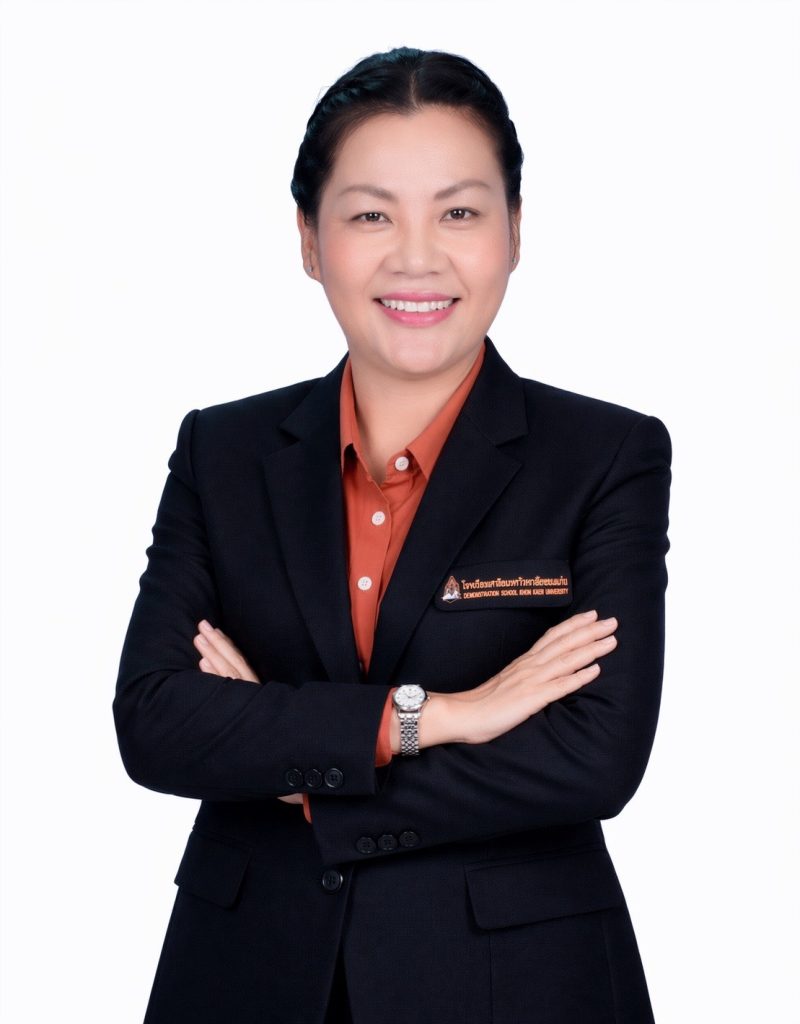
Dr. Pratuengsook Maneelam is a chemistry teacher, science educator, and researcher in science education at Demonstration School of Khon Kaen University and the Faculty of Education, Khon Kaen University, Thailand. She teaches through STEAM-integrated project-based learning and serves as an advisor to students conducting science and technology projects at national and international levels. Her research focuses on transformative science education, sustainability education, Ethical Dilemma Story Pedagogy, socio-scientific issues, and interpretive qualitative research. She completed her Ph.D. in Science Education at Khon Kaen University under the supervision of Associate Professor Dr. Chokchai Yuenyong and Prof. Dr. Peter Charles Taylor. Her work explores how ethical reflection, empathic conversation, and transformative learning can support students in engaging critically with sustainability challenges and socially responsible science learning.
Title: Plastics and the Futures We Choose: Transformative Science Learning through Ethical Dilemma Story Pedagogy
Plastic pollution is one of the biggest sustainability challenges in today’s world. Although plastic is useful and convenient in everyday life, excessive consumption has created serious environmental problems affecting ecosystems, human health, and future generations. This situation creates ethical tensions between convenience, consumer culture, and environmental responsibility. Science education, therefore, needs to move beyond teaching scientific content alone and help students reflect critically on sustainability and their responsibilities toward the future. In this sense, science classrooms can become emancipatory spaces where students critically reflect on invisible cultural and consumerist structures shaping unsustainable living. This autoethnographic study explores my reflective journey as a science teacher-researcher implementing Ethical Dilemma Story Pedagogy in an upper secondary science classroom in Thailand. The study emerged from my growing realization that science education should not only teach scientific concepts but also engage students with ethics, culture, humanity, and sustainable futures. Through ethical dilemma stories related to plastic use and waste disposal in schools and everyday life, students participated in inquiry, reflective dialogue, empathic conversation, and collaborative discussion about socio-scientific and ethical dimensions of plastic consumption.
Data were generated through classroom observations, reflective journals, interviews, students’ artifacts, the Values Learning Environment Survey (VLES), and my narrative reflections. The findings revealed that the transformative learning process supported students’ critical thinking, reflective thinking, empathic conversation, collaborative decision-making, and sustainability awareness. Importantly, the study also transformed my own understanding as a teacher by shifting my role from knowledge transmitter to facilitator of transformative learning. This study highlights the potential of transformative science education to create reflective and emancipatory spaces where both students and teachers learn, question, and transform together toward more sustainable futures.
Keywords
Plastic pollution, ethical dilemma story pedagogy, transformative learning, autoethnography, sustainability education, socio-scientific issues
Dr. Bushra Afzal
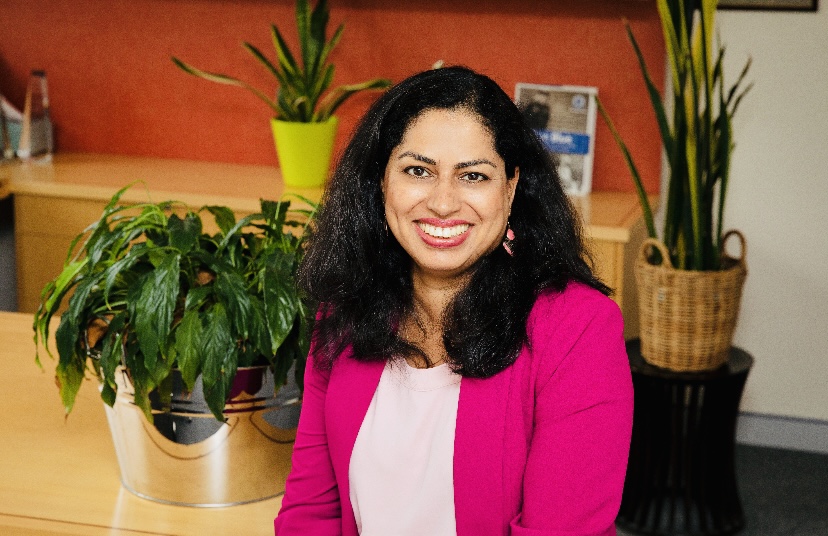
Dr. Bushra Afzal is a passionate educator and researcher who has been working in the education sector for over two decades in various roles. In her doctoral study, she explored the challenges faced by teachers from non-English-speaking backgrounds in the Australian education system and how to better integrate them. Over the course of her career, she has not only worked in and with schools but has also spent more than 13 years working with the University of New South Wales, the world-leading mental health research institute the Black Dog Institute, and the Organisation for Economic Co-operation and Development (OECD). Currently, she works at the Australian Business & Community Network (ABCN), where she leads a leadership program for school principals across Australia.
Title: Leadership Challenges Faced by Principals of Low Socio-Economic Schools in Australia
Schools are dynamic environments, and principals sit at the centre of high-performing schools, balancing educational expertise, organisational leadership, and community stewardship. The principal’s role is highly complex, spanning teaching and learning, wellbeing, finance, human resources, governance, compliance, and community engagement. While the principal’s role is multifaceted in general, the complexity increases further for those leading schools in low socio-economic areas. One in three Australian primary school students do not meet national literacy and numeracy benchmarks, with gaps widening significantly in low socio-economic communities. Improving educational outcomes for students is a key objective for principals in these settings, but the barriers they face are significant and complex. As part of a leadership program development, I conducted in-depth interviews with 12 primary school principals working in low socio-economic schools across Australia to better understand their challenges. In this paper, I present findings on the key issues they most frequently encounter.
Participants consistently identified people management, leading change, managing multimillion-dollar budgets without formal financial training, and navigating complex community contexts as their primary leadership challenges. These included managing staff wellbeing and performance, navigating generational differences within teaching teams, and conducting difficult conversations. Community engagement emerged as a recurring theme, as many families within these school communities experience poverty, trauma, and refugee-related challenges. Many principals reported feeling underprepared for the strategic and operational demands of the role, particularly meeting expectations set by department of education, and translating these requirements into practical actions that improve student outcomes. The paper concludes with recommendations for designing a strategic leadership program for principals working in low socio-economic settings.
Keywords
Leadership, low socio-economic challenges, and engagement
Dr. Niroj Dahal
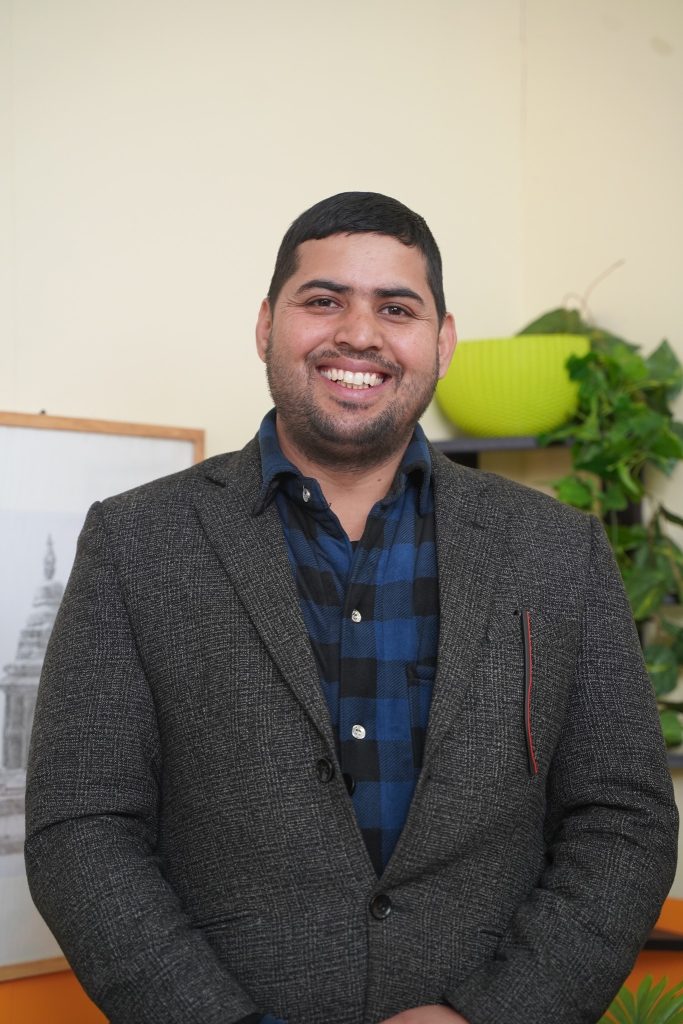
Niroj Dahal holds a PhD in STEAM Education and has built a career focused on innovative teaching methodologies and educational research. Dr. Dahal works at the Department of STEAM Education, Kathmandu University School of Education. Dr. Dahal’s research interests span a wide range, including ICT in education, qualitative research, transformative research, mathematics education, and STEAM education. Dr. Dahal was honored with the Science and Technology Youth Award by the Nepal Academy of Science and Technology (NAST) in December 2025 for his significant contributions to STEAM education and research.
Title: From Survival to Scholarship: A Transformational Journey of Struggles and Hardships
This talk unfolds my transformational experiences from a child in a remote Nepali village to a STEAM (science, technology, engineering, and mathematics) education scholar utilizing an autoethnographic approach. I was born in the mid-1980s as the second child in a nuclear family; my early life was a balancing act between domestic responsibilities, hopes, and expectations. Even in my early years, I juggled cooking, serving meals, and household chores while striving to meet the high standards set by my family. They believed they had provided everything I needed to succeed, yet the reality was a daily struggle against limited resources and one-size-fits-all frameworks. Reflecting on my transformational journeys, I realize these hardships were not merely obstacles but foundational experiences that shaped my growth. This talk shows how embracing early struggles and hardships can profoundly shape transformative experiences and contribute to meaningful change.
Keywords
Autoethnography, Transformational Journey, STEAM Education, Rural Childhood, Lived Experiences
Dr. Parbati Dhungana
Assistant Professor Parbati Dhungana is a dedicated academic currently serving as a faculty member in the Department of Inclusive Education, Early Childhood Development and Professional Studies (DIEP). She holds a Ph.D. in Education from the same university. She is deeply committed to transformative learning, teaching, research, and professional development. Her research interests cover various topics, including sociocultural perspectives, participatory approaches to teachers’ transformative learning, and gender. She has a strong publication record in reputable journals, co-authoring textbooks and contributing significantly to academic and professional discussions. She actively engages in developing university-community partnership programs, planning transdisciplinary professional development programs. Her commitment to the university’s mission is evident in her efforts to enhance the learning experiences of teachers, teacher leaders, and educators. She is empowering the next generation of scholars and teachers and advancing life-long professional learning, inclusion and equity connecting wisdom and knowledge. She aspires to enrich her academic and professional career further and leave a lasting impact in her capacity as an educator and scholar on Curriculum and Instruction Futures.
Title: A Visionary Transformative Leadership Praxis
Dr. Siddhartha Dhungana
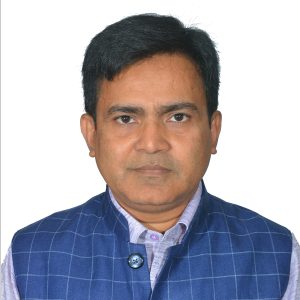
Dr. Dhungana is a faculty member in the Department of Language Education, with research interests in aakhyan analysis and post-qualitative inquiry in the fields of teacher education, English language teachers’ professional development, and multilingual education. His thematic concentration in eastern philosophical wisdom, based on rasa theories like Bhaktismirtisindhu and Bharatnatyashastra, and Yajur Vedic concepts of manas, makes me diversify the analytical and critical perspectives on language education and educators in the context of Nepal. He has worked closely with experts from five different local languages in developing university teacher-preparation programmes to shift the perspective on mother tongue languages from being a medium of instruction to being a subject. His articles on teacher professional development and ecological learning theories have added thematic values in English language education.
Title: Connecting the Dots of Multilingual Aspiration: Reimagining Language Education
The historical development of language education in Nepal has mainly focused on English language education, either in the name of social prestige or global citizenship. The debates on the linguistic dominance of Nepali over multi/indigenous languages and on English as a lingua franca for all national languages raised critical linguistic awareness to preserve and flourish multilingual educational practices. In this context, the policy recognized mother tongue-based educational practices; however, it remained limited to understanding mother tongue-based education as a medium of instruction. The advocacy for it was highlighted merely as a means of empowering learning accessibility and facilitation for students from diverse linguistic backgrounds. The challenge remained in two-dimensional understanding and practices: language is a means of communication, so mother-tongue-based education is a tool to empower education; English and Nepali are widely recognized, so avoiding them is harmful to children’s future. The first dimension has, to some extent, transformed educational practices based on teachers’ competence and willingness, with local support. The second challenge perpetuated linguistic injustices, as the children were discredited for using their local language. In this context, other colleagues and I began exploring possibilities for addressing the needs of mother-tongue-based multilingual educational practices. We realized that there is a need for a multilingual teacher education program in higher education to take the dialogue on multilingual teacher education in different perspectival orientations, not limiting it to the medium of instruction, but moving towards mother tongue languages as subjects of knowledge and consciousness for individual and national identity. This talk explores possible ventures undertaken during the journey of designing and implementing a multilingual teacher education program at a university, in collaboration with the specific community, through dialogue to practice. The talk is more based on interpretive inquiry, with critical nuances of multilingual aspirations among practitioners from the indigenous community and a curricular designer. It also incorporates my reflective inquiry into my involvement in designing multilingual curricular practices at Kathmandu University, School of Education. The exploration provides insights drawn from the initial dialogues, maps misconceptions, outlines ways to address the challenges, and designs and implements the five-language curricular practices. The finding shows that language itself is a multidimensional agency, as it corresponds to knowledge, culture, values, identity, consciousness, and the medium of instruction. The beauty of multilingual aspiration is a way to celebrate social and linguistic lives and live in diversity as a national identity.
Keywords
Multilingual education, linguistic consciousness, linguistic competence, teacher education

I am Joe Tambe Timothy, a Doctor of Education candidate at Fiji National University and the Academic Deputy Principal of Malapoa College in Vanuatu. As a native indigenous researcher and senior educational administrator, my work provides an introduction to and explores the intersection of transformative STEAM education in Vanuatu, Pacific decolonial scholarship, and disaster resilience frameworks. Using Integral Methodological Pluralism and Melanesian Tok Stori methodologies, my research models how ancestral environmental narratives can enrich modern hazard monitoring. Through this work, I aim to establish the framework upon which Vanuatu can reshape its national curricula to better serve indigenous student worldviews and protect communities on the frontlines of systemic disaster risk. This presentation highlights practical frameworks to transform junior secondary science education into active, life-saving assets for sustainable community resilience across Small Island Developing States (SIDS).
Title: STEAM Education for Secondary Science Students in Vanuatu: An Integral Methodological Pluralism Framework for Disaster Resilience
Vanuatu faces a ‘resilience cliff’ where 65.5% of students leave school after Year 10 (Ministry of Education & Training, 2024), yet the junior science curriculum rarely integrates Indigenous Knowledge (IK) with volcanic hazard science. In this doctoral research I am developing a STEAM-IK framework based on the Integral Methodological Pluralism (IMP) (Wilber, 2006) to reconcile ancestral narratives of Mount Benben (on Ambae) with Western volcanology. Using a multi-paradigmatic bricolage (Kincheloe, 2001) and Melanesian Tok Stori methodology (Sanga & Reynolds, 2018), my study documents oral histories from elders, interviews scientists, and analyses student cognitive dissonance. The expected outcome is a culturally responsive, full-spectrum disaster resilience pedagogy that treats the classroom as a preparation for real-world survival. This aligns with TERSD themes of transformative education (theme 1) and Indigenous knowledge systems (theme 6) for sustainable development.
Keywords
Disaster resilience, STEAM education, Indigenous Knowledge, Integral Methodological Pluralism, Vanuatu, Tok Stori